Abstract:
In “The Davidson Soundscape”, I uncovered the language barriers experienced by non-athletes within Davidson’s Varsity weight room. As an athlete on Davidson’s campus, I have had the opportunity to experience first-hand the sounds within a weight room and the significance they carry. However, the non-athletes (“nonners”) will never fully comprehend the aural culture in the Doe Weight Room, especially that created by the Men’s Soccer team. I captured the soundscapes present in the warmup, intense lower-body lift, cycling portion, and post-lift of the Men’s Soccer team. Throughout this essay I will show the progressions of the lift through the recordings and contextualize them with terms conceived by R. Murray Schafer. I will then further develop the cultural implications of the weight room’s language barrier by using texts by Emily Thompson and Michael Bull. The purpose of this project is to observe the everyday noises produced in the weight room, created by the presence of the athletes, which develops a cultural language barrier that stands between athletes and nonners.
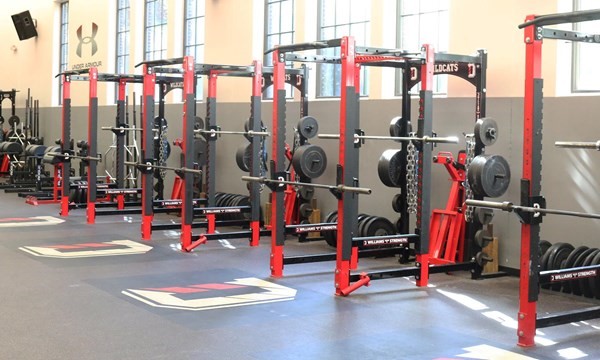
The Doe Weight Room, a prominent location for all student-athletes on Davidson’s campus, possess a soundscape unique only to the Davidson athletes and coaching staffs. As a student-athlete at Davidson, I have been able to analyze the soundscape within the weight room by participating in the lifts and have determined that there is a language developed through lifting. As one sits, closes their eyes, and listens to the sounds in the Doe Weight Room, the noises created will range from the laughter of teammates entering the space to the intense screams of their coaching staffs. These specific noises are unwanted sound, as the athlete is attempting to complete his or her lift and does not want any distractions. Between these keynotes comes uplifting and motivational music constantly being played which provides positive energy to the athletes. Keynotes are sounds that are typically overlooked within a space due to their common nature. The music genres will range from classical music to modern R&B; however, the blaring music minimizes the athlete’s language in the weight room. The athlete’s “language” is nonverbal, but a language composed by coded set of sounds. So, when one focusses on the entirety of the weight room and the sounds composed, they will catch noises primarily hidden. As R. Murray Schafer says, “noises are the sounds we have learned to ignore” (Schafer 95). The noises go unnoticed to a certain extent during the lift, but the language is present and misunderstood by nonners. While I can translate these sounds for you, I cannot translate the experience and cultural implications they possess.
The atmosphere developed in a weight room is crucial for the success of any athletic program. The soundscape can determine the motivation and work ethic demonstrated by a team. The Doe Weight Room possesses a soundscape like no other on Davidson’s campus. Emily Thompson explains that a soundscape is like an aural landscape, as “a soundscape is simultaneously a physical environment and a way of perceiving that environment; it is both a world and a culture constructed to make sense of that world” (Thompson 117). Through observation and experience, I determined that the culture in the Doe Weight Room is intense, significant, and a step on the way to a team’s unification. Along with the noises produced by the athletes, comes the initial overwhelming music being circulated throughout the entire gym. It is a leading factor for the success of an athlete within the gym as the music has “transported [us] from one cognitive and physical space to another through the dominant organizing potential of privatized sound” (Bull 198). Michael Bull highlights the power of music, as one can mentally tune out all the distractions in his or her life and focus solely on what’s important. Music has the ability to lift one’s spirits and get individuals through intense lifts with ease. Bull emphasizes the significance of music within one’s daily life, as music “creates a privatized sound world, which is in harmony with their mood, orientation and surroundings, enabling them to re-spatialise urban experience through a process of solipsistic aestheticization” (Bull 199). The privatized world is similar to the language generated by athletes, as it is both exclusive and meaningful to the athlete. The atmosphere of the Doe Weight Room is unique in itself, but the language created by the athletes and their movements develops a language based off of noise.
On one Thursday mid-afternoon in the Doe Weight Room, the gym was occupied by the Men’s Soccer team. From my seat, I could hear rap music flooding into the space, specifically songs from Meek Mill’s album, Dreams and Nightmares.
To begin the lift, the soccer team stretches and individuals roll out. This preparation allows one’s body to be prepared for an intense lift. One can hear the buzzing of a Theragun, a form of message therapy used prior to any lift.
These vibrations create one aspect of the language at hand, as the prominent hum symbolizes fatigue and soreness. The hum is a keynote for the weight room, as athletes typically use the machine before lifting. A keynote, coined by Schafer in his essay “The Soundscape”, is a term used to associate with a sound that is typically overlooked. When one uses the Theragun, everyone else is made aware of your weakened physical state. The mental preparation follows the physical, as breathing techniques prove to be effective when attempting to achieve new maxes. In between the verses, the deep inhales and exhales are produced by an athlete who is mentally preparing himself for a heavy lift, the mental and physical preparation experienced through breathing is very common within all sports as it relaxes the body for competition. Following this preparation, comes even deeper inhales and exhales as the respected athlete goes into a squat (inhale) and then aggressively pushes the weight upward to complete the rep (exhale).
This breathing exercise serves as a keynote. It is a fundamental to the weight room although not consciously listened to. As an athlete, this is an example of our language. A nonner would not be able to determine the differentiation of the inhales and exhales, creating a language barrier. For the teammates on injury reserve, they show up later and immediately go to the stationary bikes. The noises produced by a stationary bike serves as another aspect to our language, as it is associated with injury or recovery.
The subtle winds that are being produced by the stationary bikes exemplify the recovery process, as the winds start slow and finish strong. The winds being produced is yet another keynote, as it is always there and not often paid much attention to. Following yet another hour lift comes a time of celebration. As the team gathers to break it down, by saying “Cats on three…one…two…three…CATS”.
This chant proves to be soundmark in the Davidson athletic community. A soundmark is a sound unique to a community, making that specific community special and different. As the lift has ceased and the team members begin their trek to the locker room, each individual player thanks the coaching staff. The appreciation serves as another soundmark, due to the appreciative and unique culture we have on Davidson’s campus. The soundscapes presented within the warmup, intense lower-body lift, cycling portion, and post-lift results in a language unique to the athletes and coaching staffs on Davidson’s campus, while also establishing a purposeful brotherhood.
As you sit and observe between sets, you hear weights being thrown to the ground following a deadlift, the metal pounding of the bar being dropped on the rack, the heavy breathing of athletes preparing their bodies for hell, the bikes pushing wind throughout the room, motivation from teammates and strength coaches to finish the lift, and ambient music. However, one who is unfamiliar with the language of the weight room will not understand the significance of the soundmarks and keynotes within it. The Doe Weight Room consequentially establishes a language only significant to the athletes, causing a culture of student-athletes to grow in a soundscape that “consists of events heard not objects seen” (Schafer 99). By saying this, Schafer expresses the development of the athlete’s language, which is understood through listening. The weight room contains meaning and significance to every athlete on Davidson’s campus, thus establishing a professional environment where athletes strive for greatness in.

Works Cited
Bull, Michael. The Audio-Visual iPod, Sound Studies Reader. Edited by Jonathan Sterne, Taylor and Francis, 2012.
Schafer, R. Murray. The Soundscape, Sound Studies Reader. Edited by Jonathan Sterne, Taylor and Francis, 2012.
Thompson, Emily. Sound, Modernity, and History, Sound Studies Reader. Edited by Jonathan Sterne, Taylor and Francis, 2012.
“Davidson College.” Davidson College Athletics, davidsonwildcats.com/facilities/?id=31.
