By: Jacob Myers
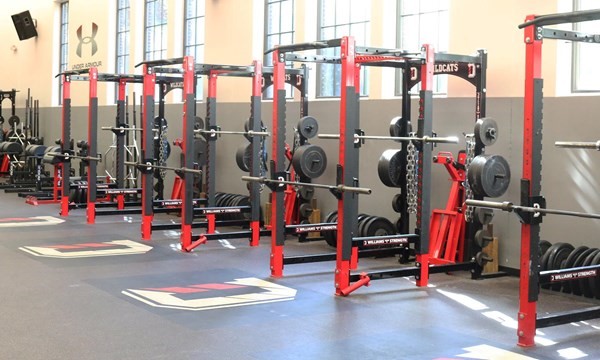
The formulation of sound through one’s voice contains meaning that is specific and original to the speaker. Paul Miller, the author of Rhythm Science, argues the opposite of this: the unoriginality of voice. Miller expresses that “the voice you speak with may not be your own” which leads me to refute his claim (Miller 71). As Miller mentions this modern-day misfortune, I reflect on the teachings and my personal projects developed during Writing 101. Throughout this course, my belief in the originality of sound has progressed as the significance of each of my essay topics became more important to my life. Through my evaluation and reevaluation of my writing, I disagree with Miller’s claim and understand the originality within varying sounds. By further analyzing Jordan Scott’s blert, I confirmed my prior beliefs of the meaning behind both his verbal and written texts. Scott uses his stutter both verbally and literarily in a way that creates his originality of self. Following my analysis of Scott’s writing, I assessed Big Freedia’s musical and social voices, as they go together. In doing so, I understand her musical originality and her unique personality. Finally, I observed sound, but more specifically the language, that sports team’s produce within the Doe Weight Room at Davidson College. This voice is nonverbal, but a voice developed through motion and machines. All these works exemplify the originality of voice in ways that pertain to the author, creator, or viewer. While Miller has a point to some extent, the pieces I have studied and composed this semester have all included uniqueness, thus opposing Miller’s remark.
The originality Jordan Scott expresses in blert and in his verbal pieces strongly contradict the beliefs expressed by Miller. In blert, I found that the “unorthodox assortment of words and phrases he composes renders the text ambiguous and leaves the reader with the feeling that its meaning is only significant to the author” (Myers). While I initially struggled to determine the significance of Scott’s text, his vocal piece allowed the me to understand that blert was written with a stutter, by a stutterer. The experience of understanding the difficulty of having a speech impediment highlights the purpose of the text, emphasizing Scott’s originality. By using odd phrases within his poem like “twa, twaddle, tweedledee, twas, twayblade, tweedledum, twat, tweezers, twinkle-toed, twig, twelve gauge, twin-engined, twix, twizzle … zizz, zag, zohar, zone, zola, zoo, zonked, zoot suit, two” the reader can interpret Scott’s usage of diction in relation to having a stutter, by connecting the literary piece with the vocal one (Scott 45). I needed to associate the vocal piece with the text in order to understand Scott’s purpose. Scott writes in the voice of someone with a speech impediment, demonstrating the overwhelming difficulty of living with a stutter. The construction of the text is not significant within the work, but the sounds produced by the text complete the meaning. The presentation of a disability within a literary work appears to be a challenge for the reader, which parallels the challenge that Scott faces every day. This originality of sound is significant to Scott, yet it does not pertain to my life. Although I observed originality, it was less impactful on myself.
Big Freedia is the definition of using an original voice. She is one of the most unordinary and unique individuals I have ever studied. Initially, I was uninterested in her work due to my preconceived distaste of Bounce music. While I still dislike the genre (to a lesser degree), I have gained a liking for the “Queen of Bounce” (Younger). In this project, I analyzed her sound and the meaning behind her voice in the same way I analyze literary text. The different layers of her voice represent social platforms which allowed me to find new meaning in sound. Through this new meaning, Freedia became more than just an advocate for equality, but a “genderqueer performance artist” supporting millions (Myers). By representing the LGBTQ community, Freedia found her role in promoting self-acceptance for oneself within her music. An example of her advocation for self-acceptance is in her hit single Explode; Freedia says that “my music makes me feel good about what I do and the culture that I represent. People get confused if I am he or she. I am more than just Big Freedia, I am more than just Queen Diva. I am more than just Freddie Ross. I am me. I am the ambassador for New Orleans and for Bounce Music” (Explode). Freedia’s influence in Bounce music has allowed the genre to gain a greater connotation. I used to think of the genre as purely energetic noise with no meaning, however, I learned that I could view the irregular noises in a different perspective which reveals a deeper meaning. Big Freedia is changing the meaning behind Bounce by incorporating her messages of originality and self-acceptance in her music. She has also changed the way I view her music, which has helped me to understand this originality on a more personal basis. More than Scott, Big Freedia showed me the impact of an original voice.
In “The Davidson Soundscape,” the sounds form a language unique to the athletic programs on Davidson’s campus. The sounds experienced first-hand in the varsity weight room may be misinterpreted by most of Davidson’s population. These sounds contain originality and significance to the athletes on this campus. I initially struggled with understanding the meaning behind some aspects of our language. However, through participating in the lifts, I became familiar with it. One can draw conclusions from an athlete’s physical state (the buzzing of the recovery theragun), mental state (breathing exercises), and working state (the banging of metal weights during a working set) through sound. The cultural language barrier established by the athletes is nonverbal, “but a language composed by a coded set of sounds” (Myers). The deep in-and-exhales produced by athletes is an example of our “language.” For instance, following one’s mental preparation “comes even deeper inhales and exhales as the respected athlete goes into a squat (inhale) and then aggressively pushes the weight upward to complete the rep (exhale)” (Myers). These breathing exercises are fundamental to the success within a weight room; a non-athlete would not be able to understand the significance, creating a language barrier. The original sounds produced in the weight room are meaningful to me as a Davidson student-athlete, allowing me to understand the values to listening to my surroundings. The observation of the weight room was the most significant research as it has deepened my view of the importance of sound.
Through Scott’s literary and vocal texts, Big Freedia’s music, and the nonverbal communication between Davidson athletes, I was able to demonstrate that there are still original voices and ideas being produced within our society today. The progression of these projects has deepened my understanding of originality in sound. My analysis of Scott’s written sound introduced me to the idea of purposeful sound. The written sound proved to be impactful in the life of Scott but lacked significance to me. With Big Freedia, the voice she establishes became more personal because music heavily impacts my life. Understanding her purposeful originality changed my opinion about her music and music in general. My final project proved to be the most impactful, as it contributed greatly in my understanding of sound’s significance and originality. The soundscape within the weight room is one that I observe daily, allowing it to be the most personal. Along with my newfound understanding of interpreting sound, I was able to disagree with Miller’s acknowledgement of the lack of originality of voice through these projects. Initially, I was oblivious to the differentiation and the significance certain sounds contain, and just as naïve as Miller. Through the contextualization of writing, music, and my personal soundscape, I was able to draw connections between their originality and influence on my life. Sound contributes greatly to our lives, and without it, our world would contain no meaning.
Works Cited
Big Freedia. Just Be Free. Lyrics to “Explode.” Happy Place, 2014.
Schafer, R. Murray. The Soundscape, Sound Studies Reader. Edited by Jonathan Sterne, Taylor and Francis, 2012.
Scott, Jordan. Blert. Coach House Books, 2008.
Younger, Briana, and Briana Younger. “Big Freedia.” The New Yorker, The New Yorker, 3 Jan. 2019, www.newyorker.com/goings-on-about-town/night-life/big-freedia-3.