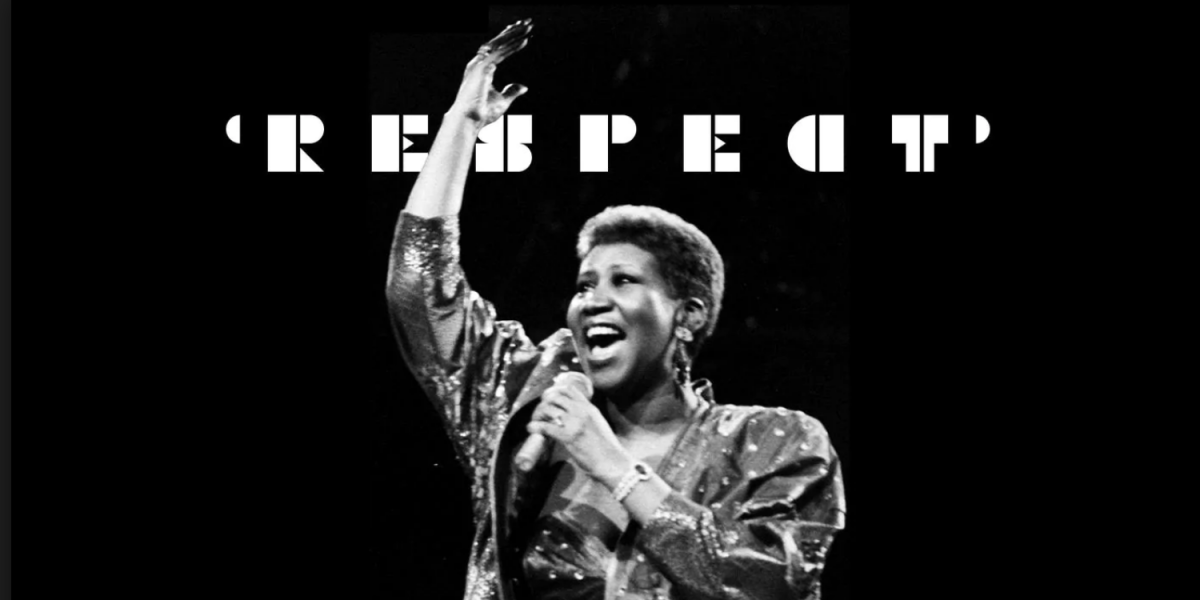
“Franklin’s song gave many people what they longed for most: a voice.”

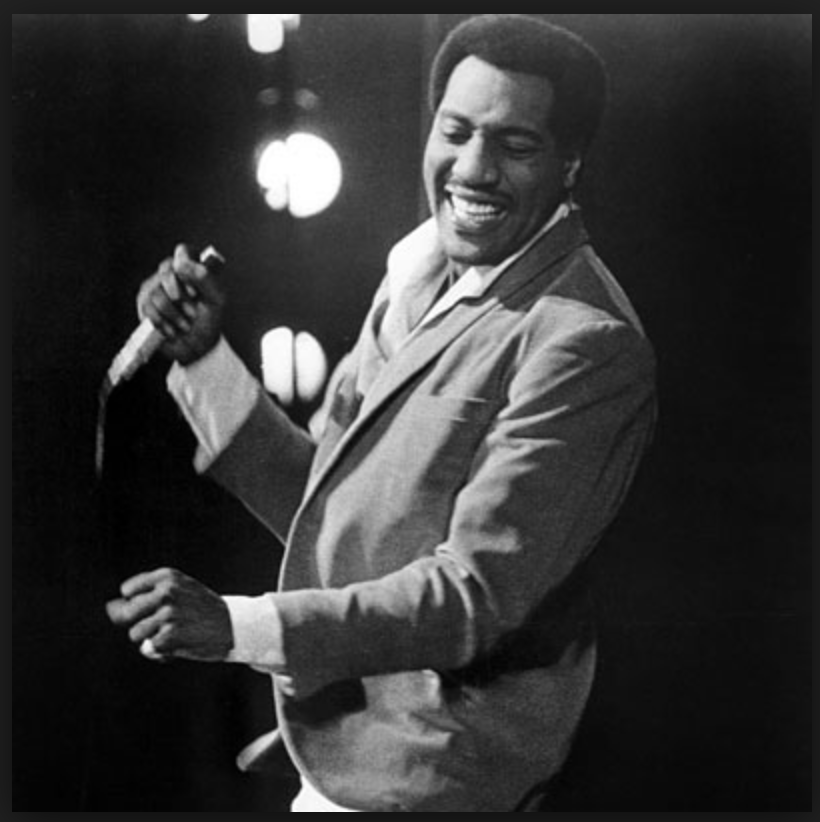
The year 1965 was a great year for music. The Rolling Stones went on their 1st American Tour, Frank Sinatra won four Grammys including Record of the Year, and the Temptations’ “My Girl” rose to the top of Billboard charts. Legendary R&B artist Otis Redding had another great year, releasing his third album Otis Redding Sings Soul. The album dazzled with four originals and six covers including a sensational rendition of “(I Can’t Get No) Satisfaction”. This nearly perfect album had one major blemish: a tired, uninteresting track about his wife that Redding entitled “Respect”. Basic at best, this tune was forgotten amid the other successful songs on the album. Two years later, acclaimed soul artist Aretha Franklin unearthed Redding’s “Respect” and gave it a new life of its own. Franklin’s cover revived the once-dead song and turned it into a widely popular piece heard even today, 50 years later. Whether or not Franklin intended this, however, is up for debate. Contrary to popular belief, Franklin did not knowingly produce an anthem, but rather the song’s popularity was a result of the current political climate.
Aretha Franklin’s “Respect” differs greatly from Otis Redding’s original, not only in its sound but also in its lyrics. Redding’s 1965 original lacks any special vocal emphasis, it is not like the majority of his songs as it lacks all emotion. The original song is short, with the simple two-line chorus of “All I’m asking is for a little respect / When I come home”. The instrumentation is basic, with a five-note motif seen after each refrain. In this two-minute song, Redding implores his wife to treat him with more respect. He repeats that respect is what he needs, implying that because he is a man he deserves a certain standard of treatment. Franklin’s “Respect”, on the other hand, is packed with emotion. She uses her powerful, boisterous voice to deliver a song laced with frustration, tenacity, and demand. The entire instrumentational set-up, not just the lyrics, has semantic content. With two different kinds of saxophones, several drums and a keyboard Franklin creates music to accent the words she is singing. She also alters the lyrics slightly by adding in a new chorus, thus the birth of the infamous “R-E-S-P-E-C-T / Find out what it means to me”. Regardless of whether it was the changes Franklin made or the uniqueness of her voice that set this song on fire, there is no doubt that Franklin’s version caught major attention from critics worldwide.
It became clear very quickly that what Franklin did with “Respect” elevated the song to a new level of importance. While Redding’s version received little cultural merit, Franklin’s cover was highly popular, and was seen as an anthem for social activism. In Soul Covers: Rhythm and Blues Remakes and the Struggle for Artistic Identity, Michael Awkward discusses how artists used cover songs to debate racial, artistic, and personal authenticity. Particularly, he focuses the musical identities that artists were able to find in songs originally performed by different artists, including those of Aretha Franklin. To Awkward, “Respect was received as a racial anthem that brought a new era of meaningful music with groove to America”. As the civil rights movement raced its way through the country, Franklin’s song found a perfect home in the mouths of those who felt overlooked and mistreated. Regardless of her intentions, “Respect” became a source of hope and rebellion for many Americans. To her audience, “[Franklin] embodied the social and cultural change that was taking place in the country merely by being herself without pretense”. For perhaps the first time in history, a black female was on stage singing about black female issues. Rarely did a marginalized minority have the opportunity or platform to advocate for themselves, and here Franklin did it on a national scale. As she rose to fame, it quickly became clear that Franklin was more than just a singer, she was an activist. Awkward goes on to explain that “Franklin’s reign as Queen of Soul was burdened with the weight of sociopolitical significance none of her predecessors had to bear” (Awkward 56). The social climate in the 1960s, Franklin’s audience, and her talent as a singer all combined to create the unique opportunity for her work to foment a social movement, which happened with the release of “Respect”. Whether or not we can consider this fame to be entirely the result Franklin’s own merit, however, is up for debate.
For many, cover songs should maintain the integrity of the original, as the performer is less important than the song’s composition. In the early stages of recording, song covers served as a way to further a song’s social reach. When looking into the history of the cover song, researchers Dr. Keir Keightley and Sean Dineley illuminated the cover’s origins and purpose in the mid 20th century. According to Dineley, “A successful product was one that sold well in multiple versions, speaking to the appeal of the composition rather than the composer”. In other words, a cover song was not in competition with the original, but was seen as a perpetuation of the composition. The success of a song sung by different artists in a myriad of circumstances spoke to the universality of the piece. Thus, if we apply this to Aretha Franklin’s “Respect”, her success with the song was not the sole result of her ability, but rather a combination of the right time, the right place, and a good song written by Redding. Dineley goes on to explain that “cover versions were not only released by competing record labels but multiple versions were often released on the same label to distribute a single composition to diverse markets” (Dineley 65). While occasionally other labels produced a cover version to compete with the original label’s piece, this was not always the case. Many times, the label produced cover renditions to make more money. If the song could sell in two versions rather than one, that created more opportunity for revenue. With this perspective on cover songs, Franklin did not create a new song that sold better than Redding’s. Instead, she sung Redding’s song is a way that made it more popular. This opinion, however, is not a common one.

It is perhaps more appropriate to view Franklin’s cover as one intending to greatly alter original, rather than a product of circumstance. Most people consider cover songs to be an opportunity for a new artist to add something more to an existing song, which is what many people understand Franklin to have done. On Hi-Phi Nation’s podcast “Cover Me Softly”, the success of a cover song is discussed extensively. According to guest author and cover-song expert Ray Padgett, “A version of a song could only be possible if there was something that covering itself could add creatively and aesthetically to an existing song” The creation of a cover song is not possible unless the covering artist has vision to add something more, to push the song into new arenas, to challenge its barriers. A cover can soar, but it also can flop. Do too little, and the audience will question as to why the song was covered in the first place, do too much, and the original will be lost completely. Pagett goes on to explain that “if you take your favorite Beatles recording and placed it side by side with an impeccable mimic cover of that recording, only one has the status of art” (Padgett). To create art, it must have originality, imagination, and purpose. A cover song that is too similar to the original lacks voice and creativity, and at that point it no longer has importance. If Franklin had kept Redding’s song entirely the same, it would lack any of the meaning we have attributed to it. If she had sung it at the same pitch, with the same words, emphasis, and instruments as Redding, it would be nothing but a copy. However, she adds her own flare, her own experiences, her own meaning, and it becomes something larger than herself.
Whether or not Franklin intended to create an anthem when she produced the song, however, is up for discussion. It seems obvious that “Respect”, flush with anger and determination, was created to belong to activists. Franklin, though, has denied any intention to create an anthem by saying “what they hear and what I feel when I sing it can be very, very different”. As Michael Awkward states in his book, “If Otis felt he lost his song to ‘that girl’, Franklin recognizes that she ‘lost’ it both to nationalist and feminist listeners who hear and continue to hear it as infused with authentic racial and gendered meanings she did not mean” (Awkward 56). In the excitement and chaos of the civil rights movement, the intention of Franklin’s song seems to be lost almost completely. Activist groups found solace in a song about social issues and blew Franklin into the poster-child for their movement. To Franklin, this was a personal song indicative of her struggle as a black female in the United States. This was Franklin taking back her power, a demand for a higher worth, a commitment to accountability. Though meant to be individual song, the black female struggle was a community struggle not unique to Franklin. The release of “Respect” situated in the social climate of the 1960s created a perfect outlet for the estranged and alienated Americans who needed representation. Franklin’s song gave many people that which they longed for most: a voice.

Ultimately, Aretha Franklin’s cover of “Respect” fulfilled some people’s expectation of a cover, but also fulfilled others to the point where people began to cover Franklin’s version. In one sense, she turned a tired, quiet song into a belting diva tune. Her voice was considered an instrument that one could pick up and play, adding a new flare to Redding’s original. To others, Franklin took the piece and added her own meaning, turning it into an entirely different song. She transformed “Respect” from a song about a man imploring his wife to respect him to one demanding to be heard in a time where a black female’s voice was often silenced. Of her intention, however, we cannot be sure. Knowing that Franklin had not planned for this song to become an anthem creates an interesting dynamic between performer and consumer. Her audience misconstrued her voice to be a national billboard for activism without her consent. With the popularity of Franklin’s “Respect” came the understanding that no longer does the artist’s intention matter – music has become what the consumers make it. Thoughts and feelings of artists have no bearing on the way one appreciates the music, it is all up to those who listen.
Works Cited
Awkward, Michael. Soul Covers: Rhythm and Blues Remakes and the Struggle for Artistic
Identity. Duke University Press, 2007. Duke University Books.Web. 12 March 2019.
Dineley, Sean, “Covers Uncovered: A History of the “Cover Version,” from Bing Crosby to the
Flaming Lips” (2014). Electronic Thesis and Dissertation Repository. 2119.
Franklin, Aretha. “Respect.” I Never Loved A Man The Way That I Love You. Atlantic Records,
1967, track 1. Spotify, open.spotify.com/track/7s25THrKz86DM225dOYwnr?si=sn_JzQjYQ3e3rjLDvcLQQg
Redding, Otis. “Respect.” Otis Redding: Otis Redding Sings Soul. Stax Records, 1965, track 14.
Spotify, open.spotify.com/track/1NGGxERGytoBIGn7dtSzeu?si=sdBFw5ciRbevcySIIdF_JA
Padgett, Ray. Cover Me: The Stories behind the Greatest Cover Songs of All Time. Sterling, 2017.
